
Natura Obscura
5 – 11 October 2026 at 7 public locations in Copenhagen
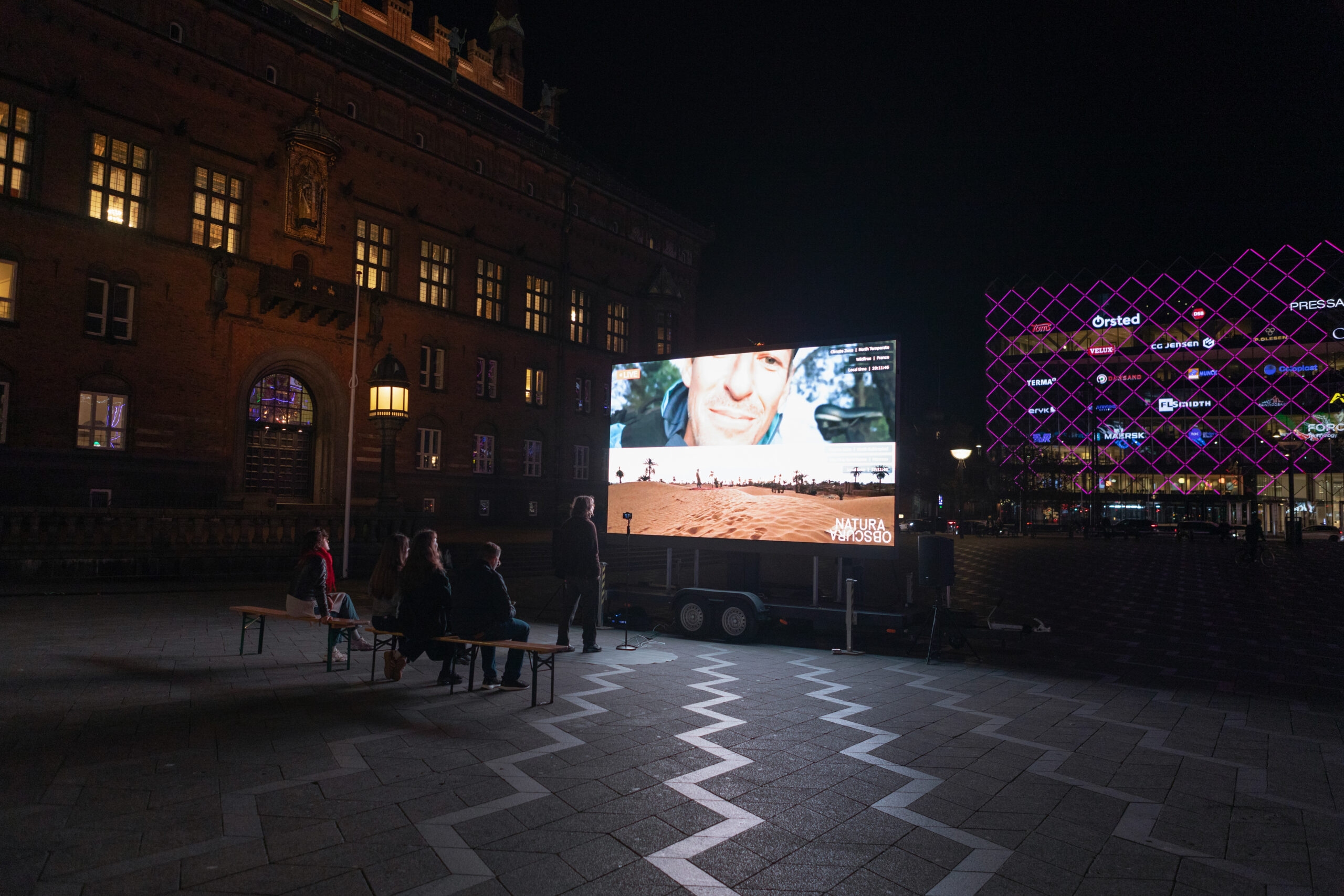
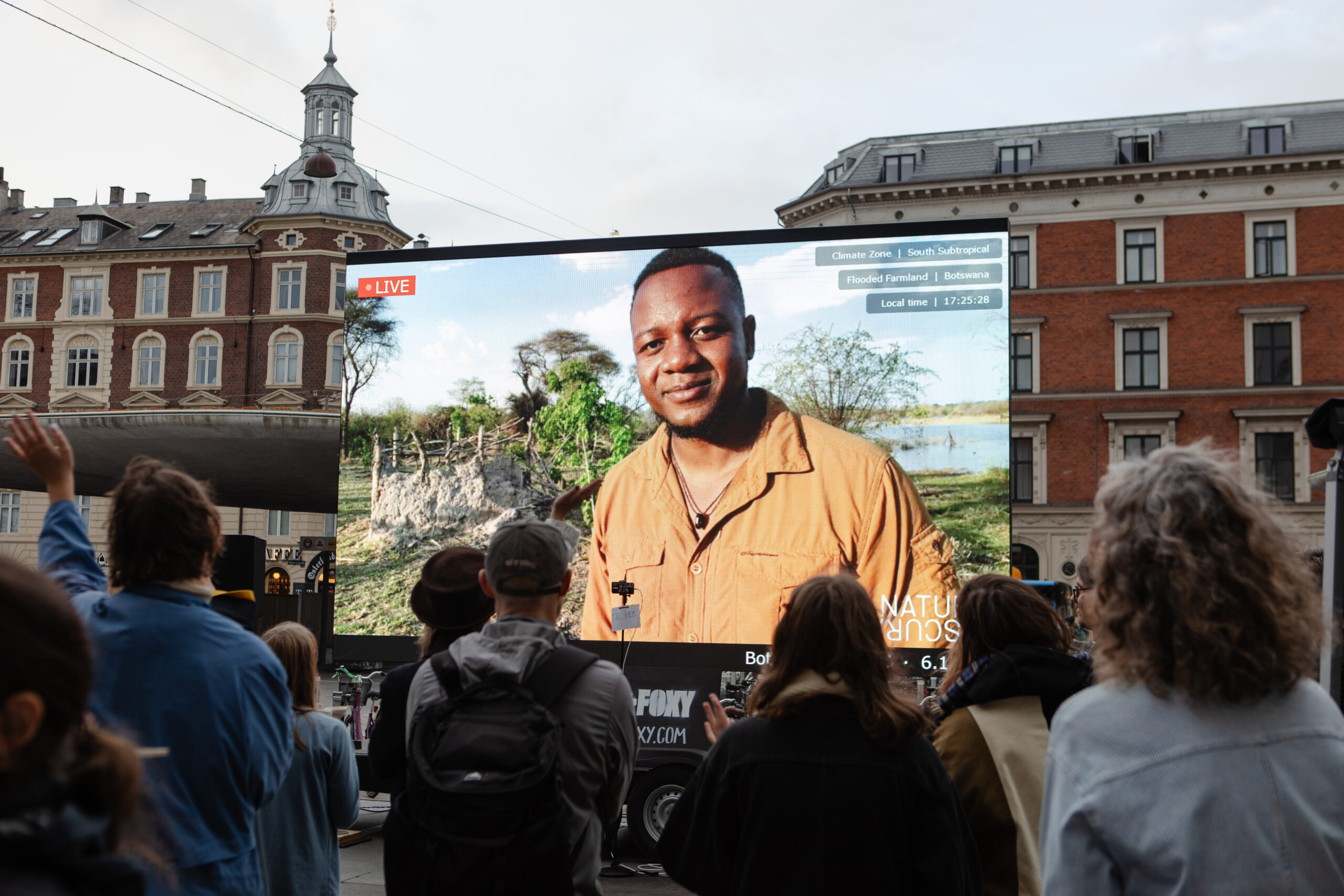
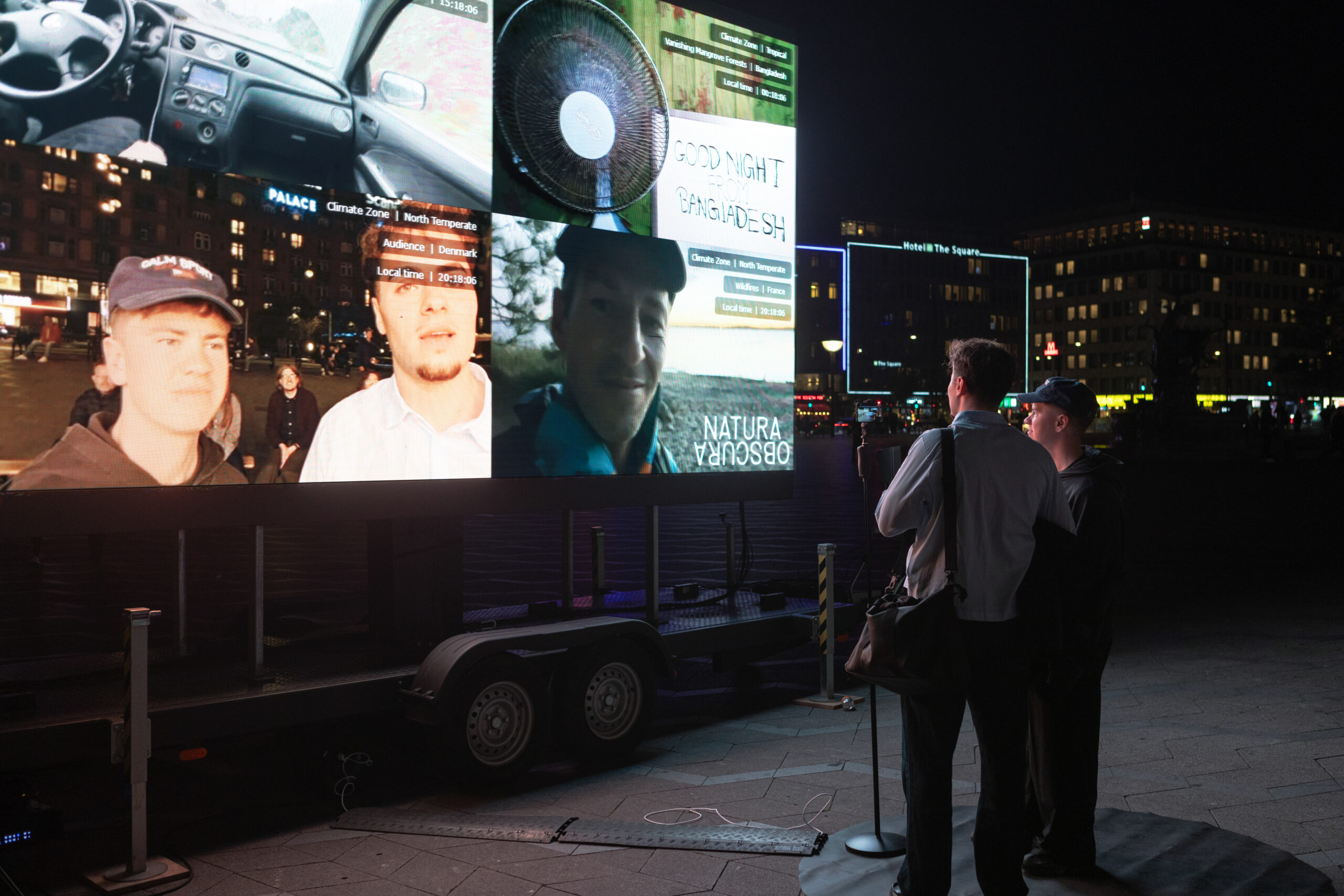
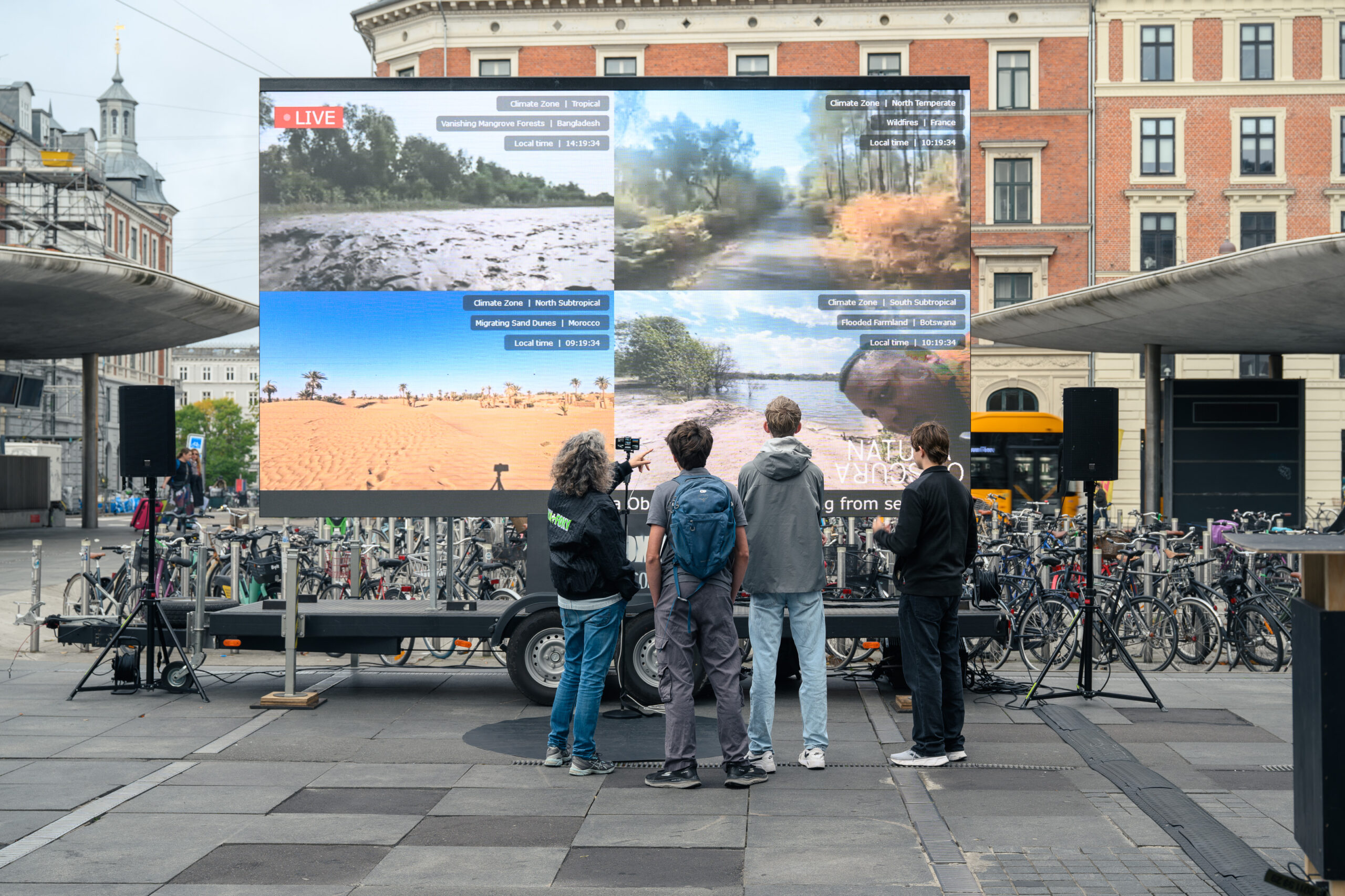
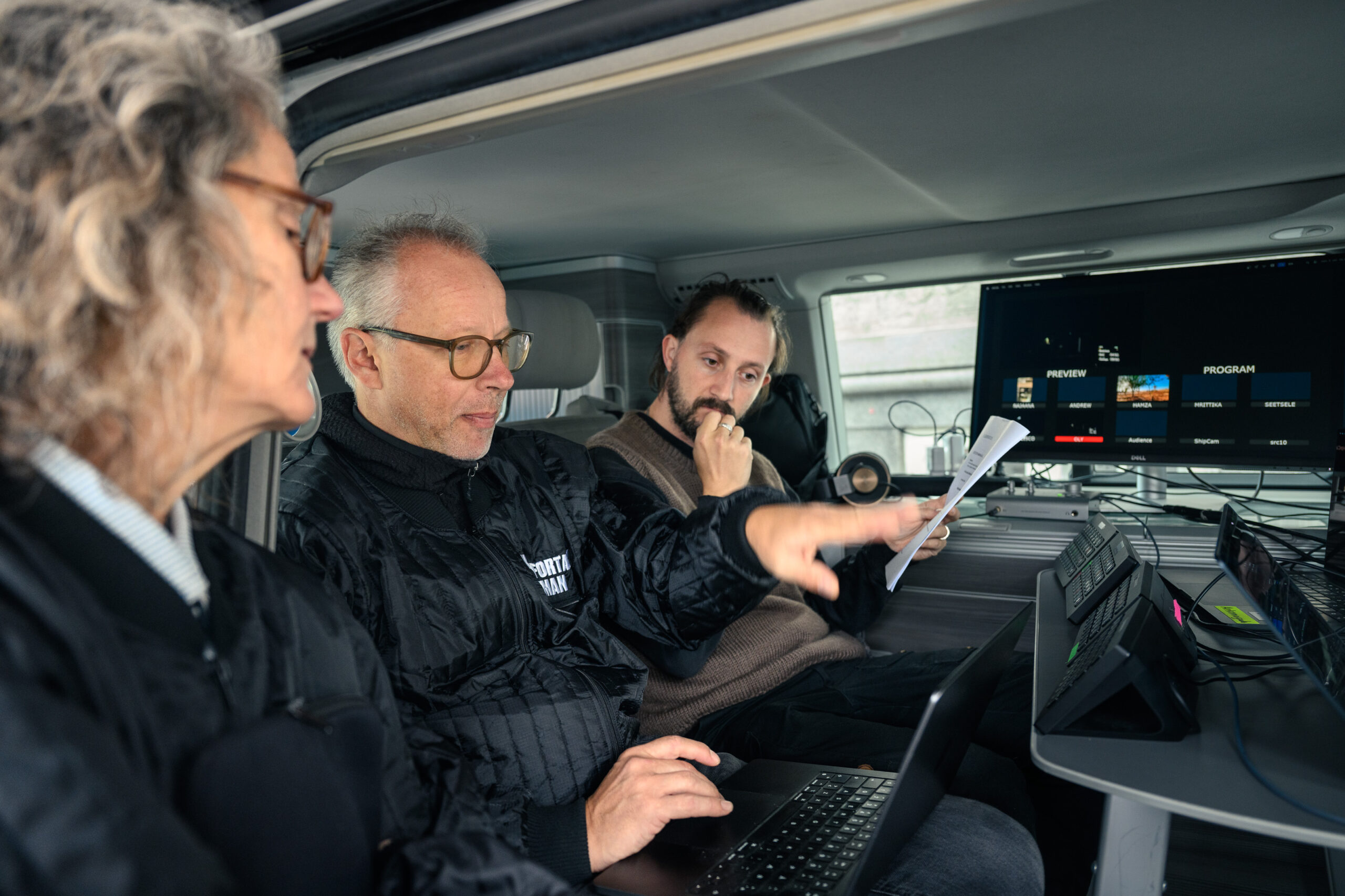
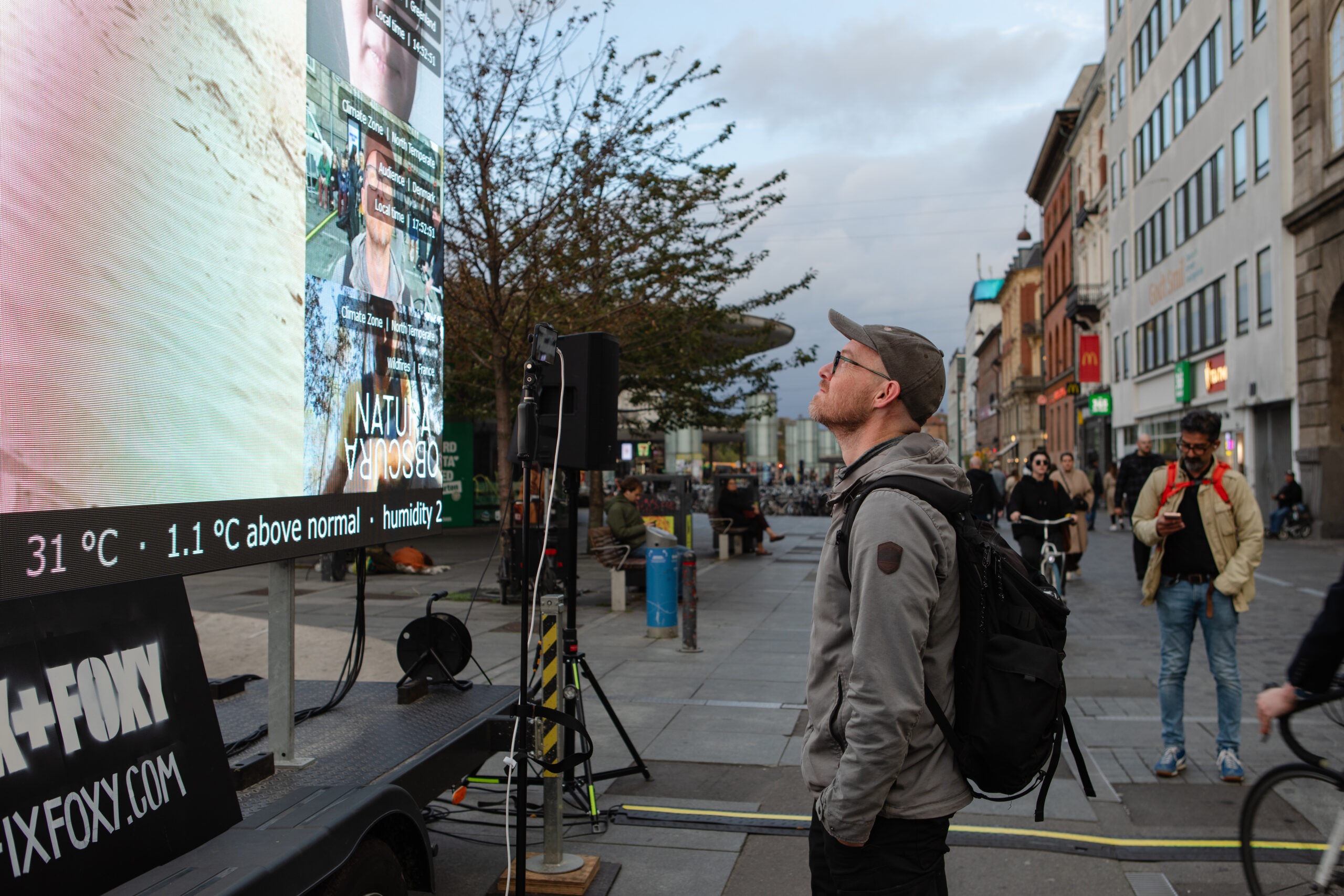
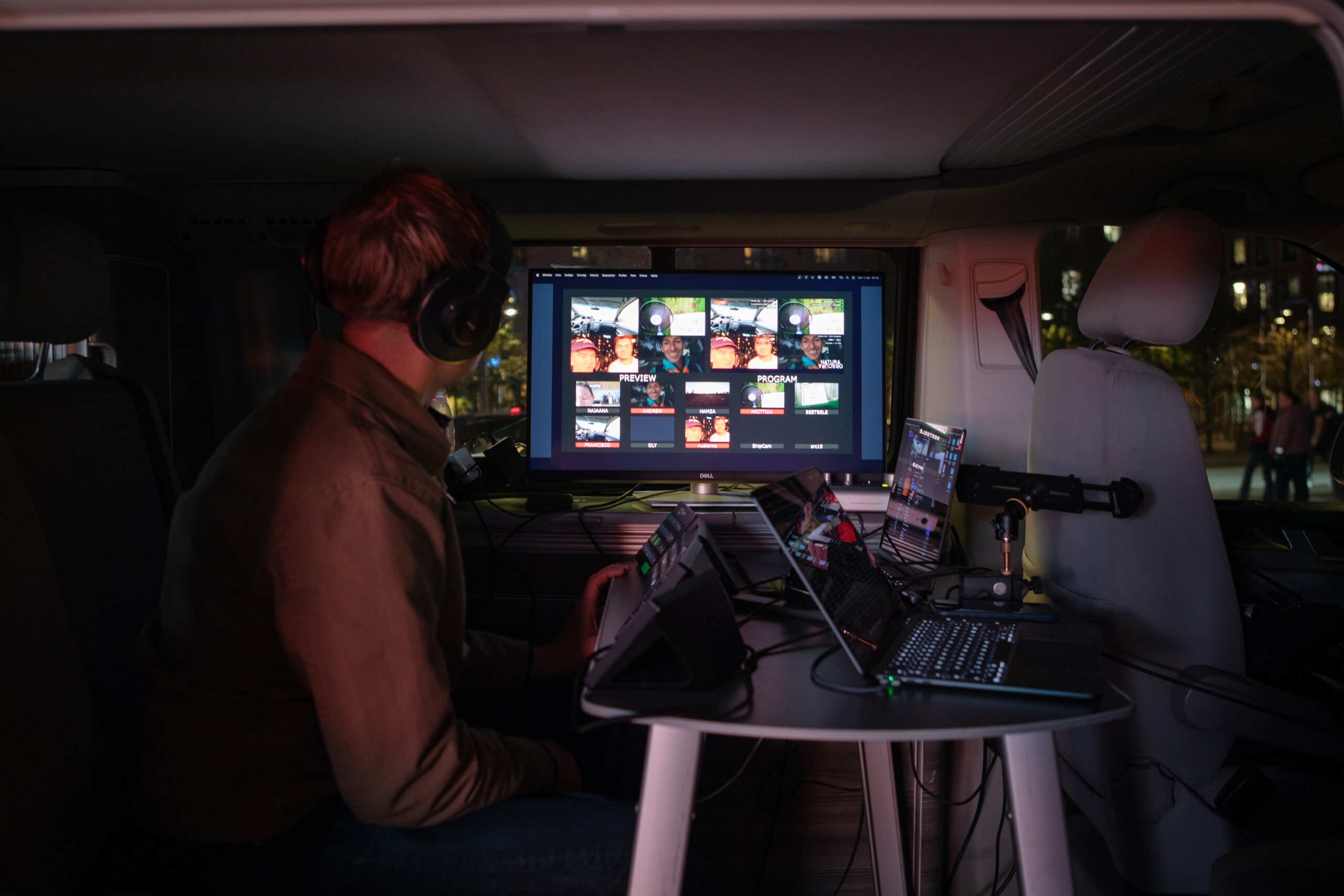
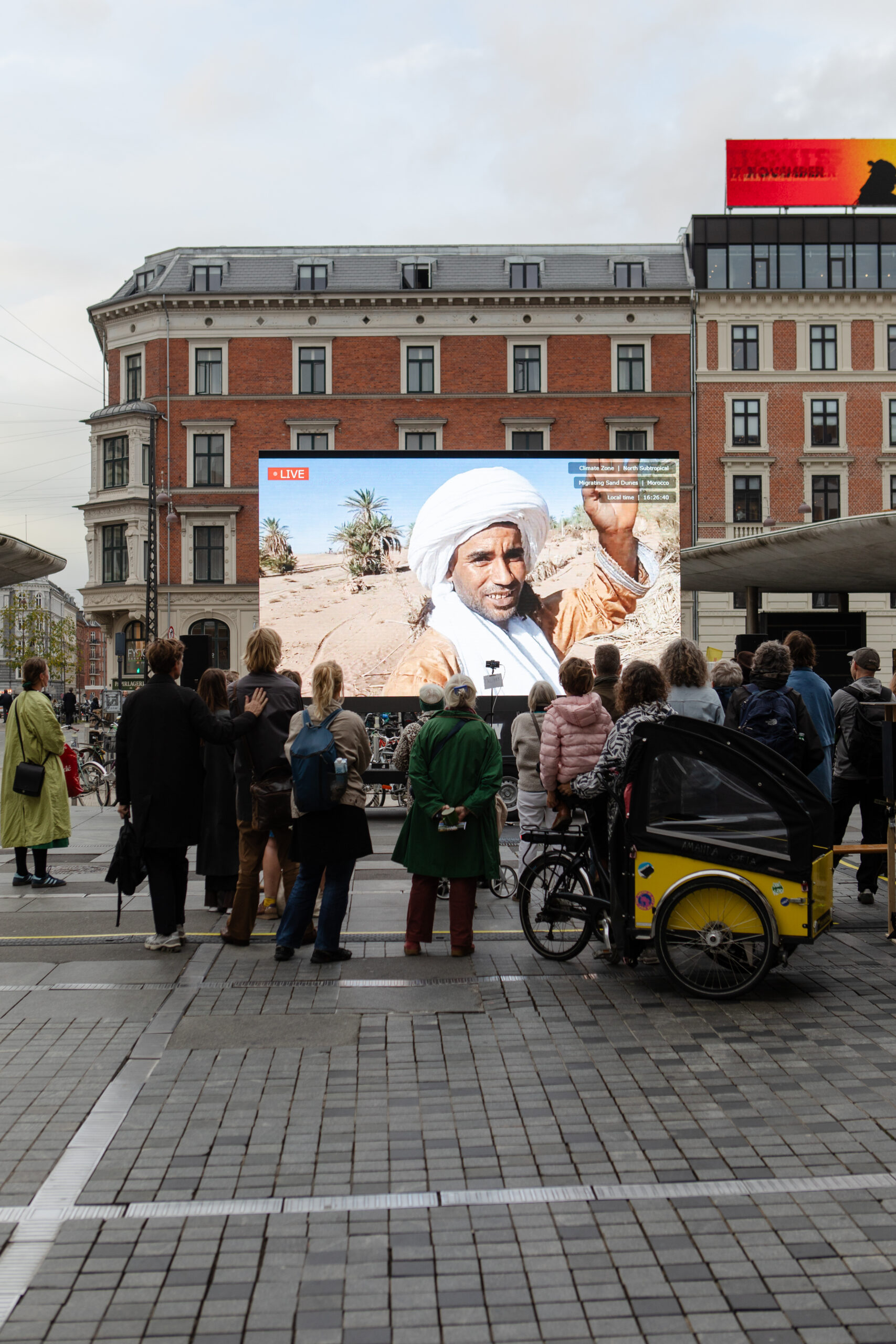
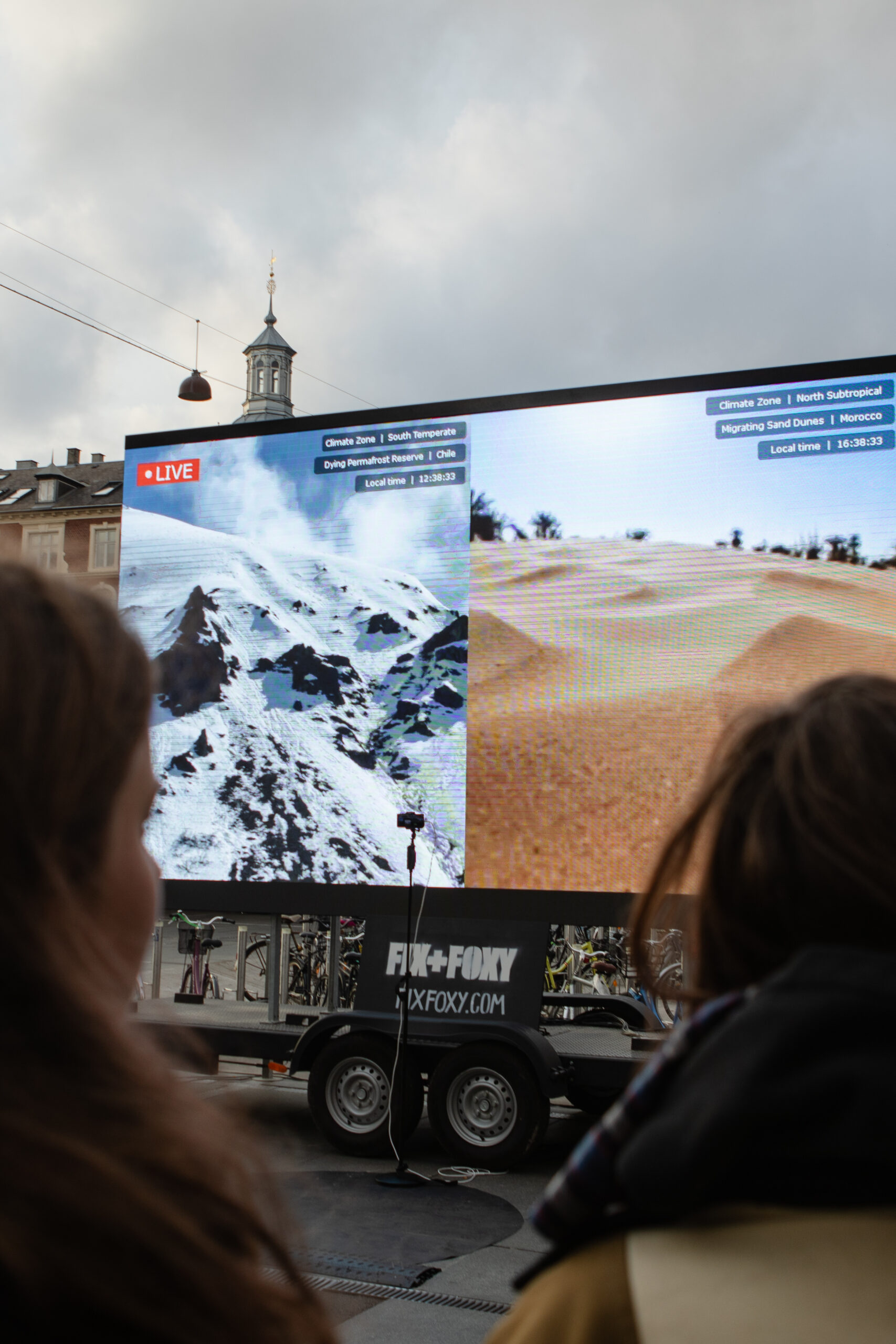
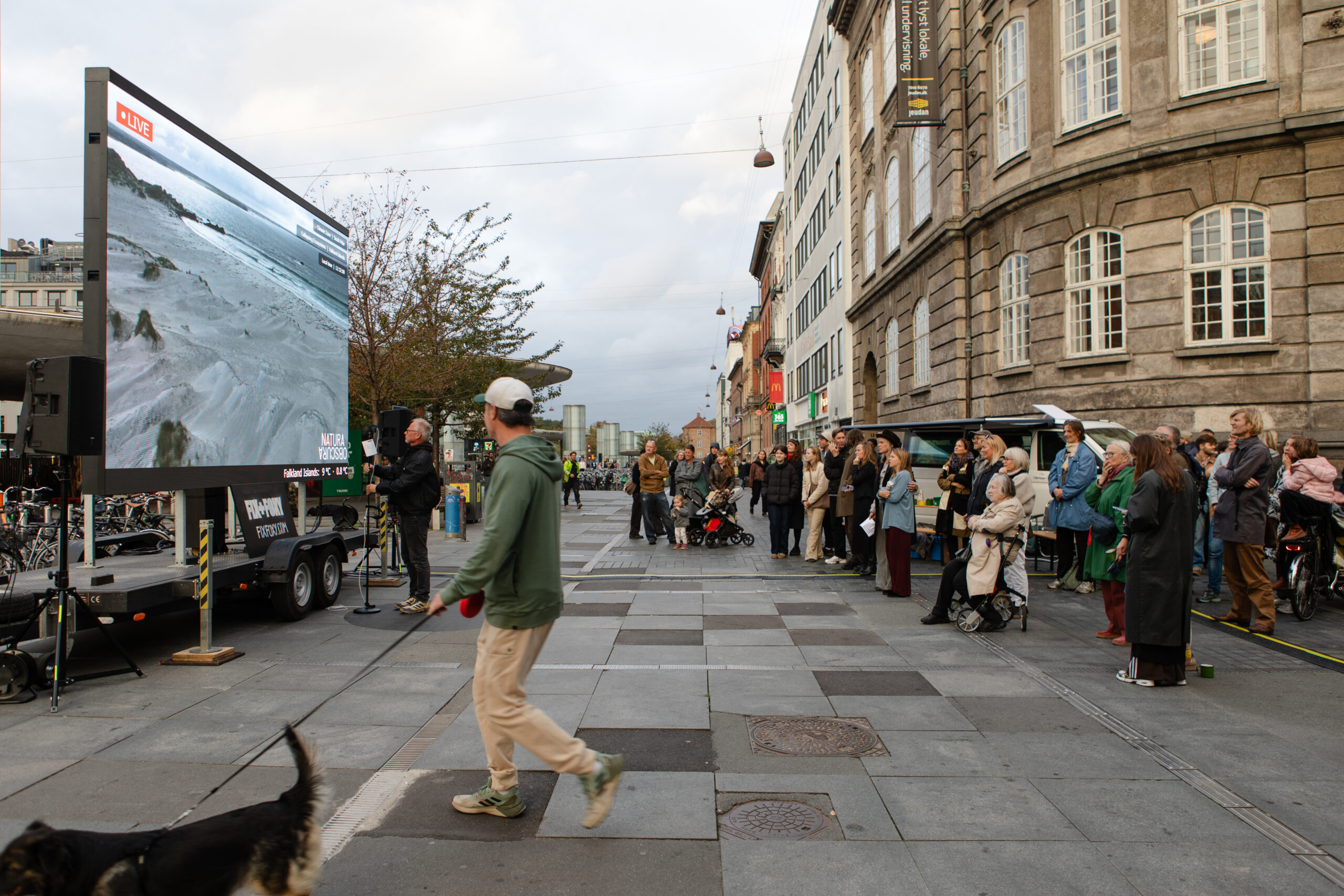
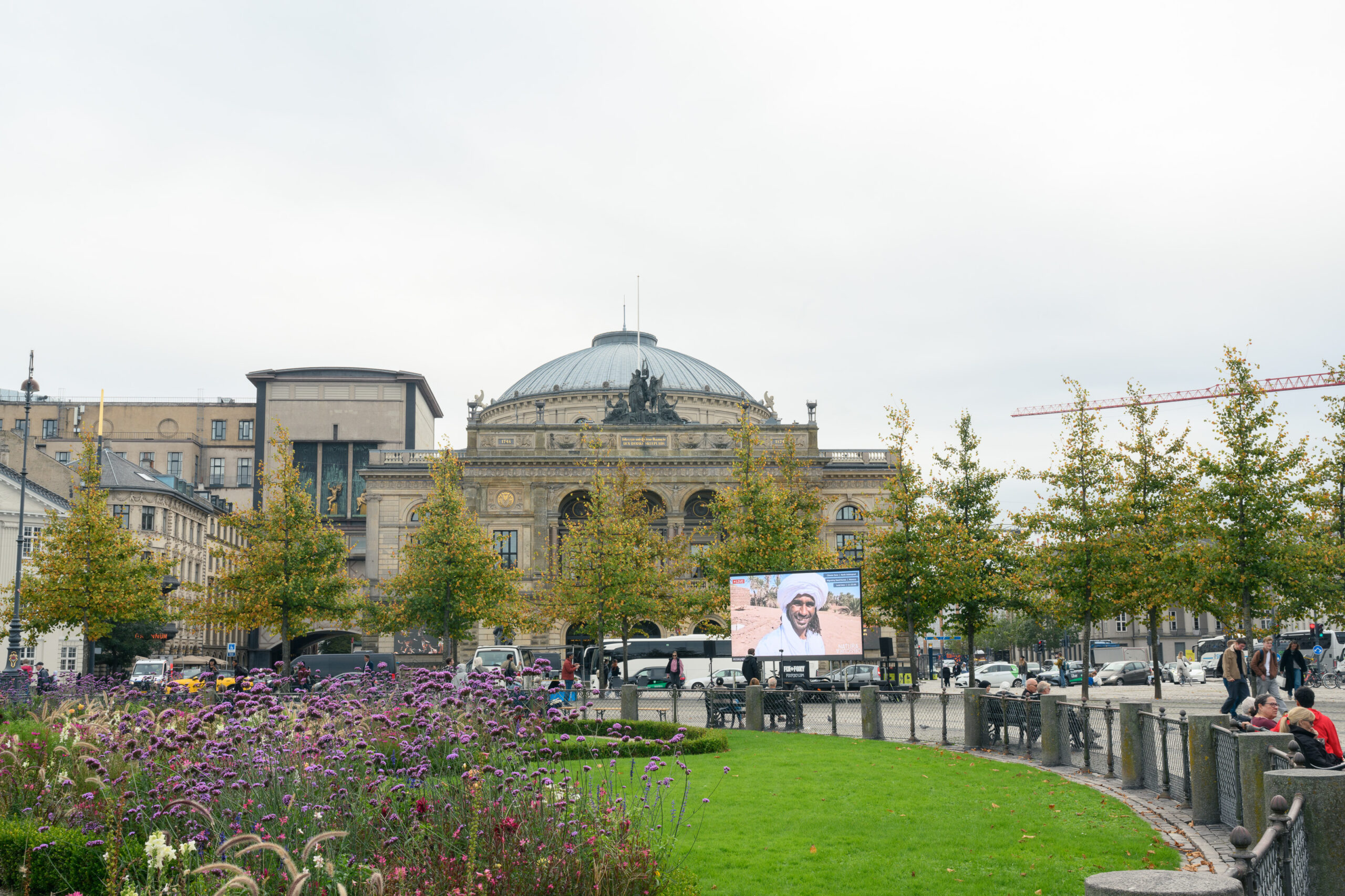
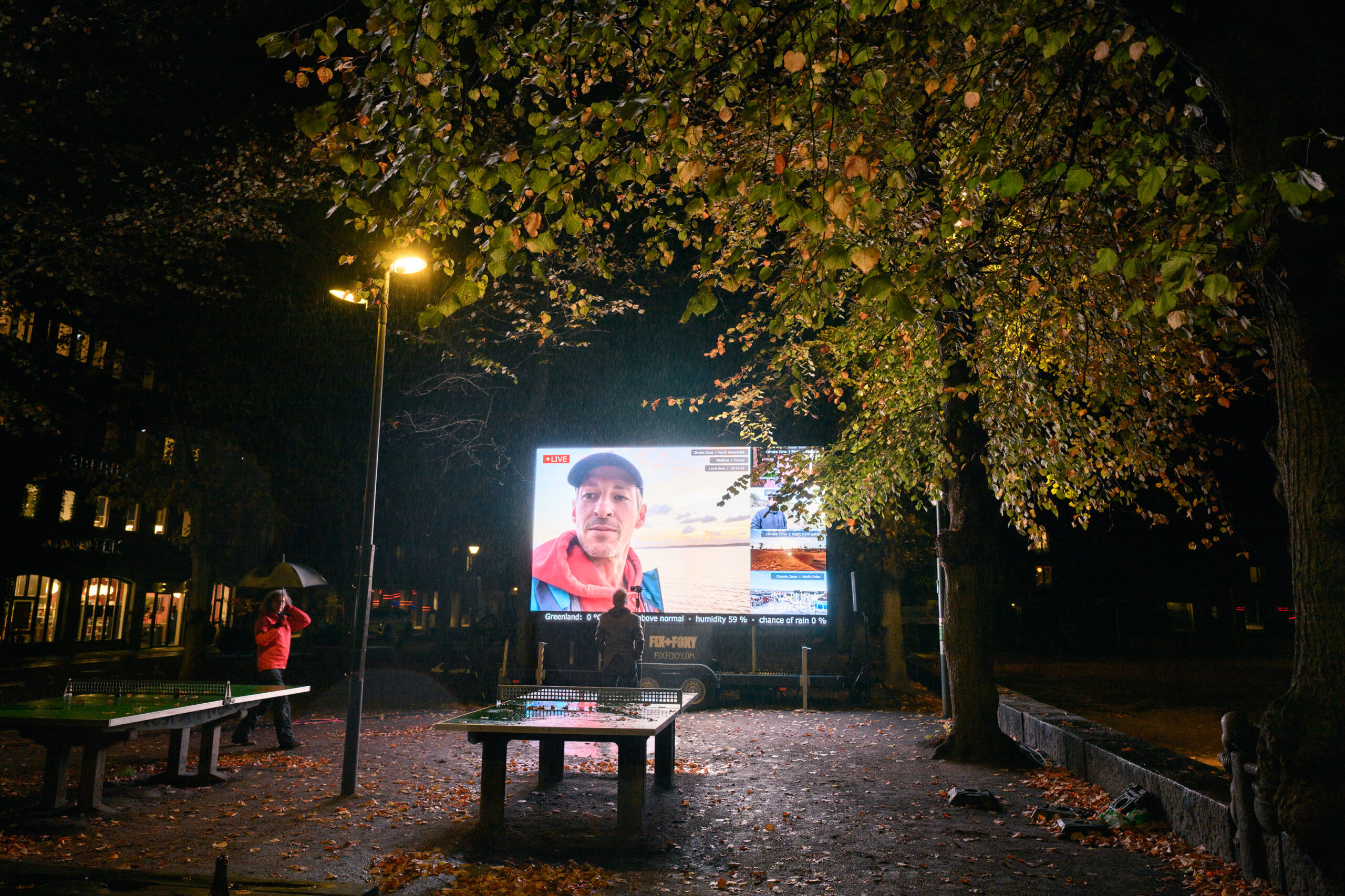
NATURA OBSCURA is an interactive video installation unfolding over 7 days, where participants from the world’s 7 climate zones will be live-streaming from places affected by climate change. It is an encounter between passers-by in the urban space and the people, landscapes, and destinies shaped by environmental changes in real time.
Who can you meet?
The farmer Hamza in the town of Zaouia el Hna in the extremely water-scarce Sahara, where the town is constantly threatened by desert storms sweeping in from the south; 12-year-old Apu, who lives in the world’s largest mangrove forest in Bangladesh, an ecosystem that is gradually being eroded; Najaana in Ilulissat, Greenland, where the glaciers are slowly disappearing; Seetsele in the flood-affected cities of Botswana; Andrew in the fire-ravaged areas around Bordeaux; Francisco in Chile, one of the regions of the world experiencing some of the fastest permafrost melt; and Oly in the Falkland Islands, where dramatic changes in nature are placing increasing pressure on wildlife.
Where?
The work is broadcast live from 10:00 am to 10:00 pm on a large screen at seven different public locations in Copenhagen — a new location each day.
Monday 5/10: Nørreport station, Copenhagen
Tuesday 6/10: Enghave Square, Copenhagen
Wednesday 7/10: Kongens Nytorv next to the metro, Copenhagen
Thursday 8/10: Blågårds Square, Copenhagen
Friday 9/10: Israel’s Square, Copenhagen
Saturday 10/10: Trianglen, Copenhagen
Sunday 11/10: Under Bispebuen, Copenhagen (N.B.: Time for Sunday 10 am to 4 pm)
The current livesteam of the day is accessible via this link
NATURA OBSCURA is supported by Statens Kunstfond, Beckett-Fonden and Overretssagfører L. Zeuthens Mindelegat.
CREDITS
Concept and director – Tue Biering
Concept and co-director – Louise Beck
Video designer – Jeppe Deibjerg Kristensen
Caster and Participants manager – Lena Milovic
Location scout – Jacob Juul Sprogøe
Dramaturg – Betina Rex
Production manager – Jonathan Hjorth
Producer – Jovana Zoric
Technical consultant and operator – Jeppe Deibjerg Kristensen
Operator – Jacob Juul Sprogøe
Photos – Søren Meisner, Hedda Rysstad
PARTICIPANTS
Northern Polar Climate Zone, Greenland Najaana Mørch
Northern Temperate Climate Zone, France Andrew Burrows
Northern Subtropical Climate Zone, Morocco Hamza El Gharoumi
Tropical Climate Zone, Bangladesh Subrata Munda, Nirapodo Munda, Mrittika Gain, Reetu Sattar
Southern Subtropical Climate Zone, Botswana Gaokgonwe Seetsele Nthomiwa
Southern Temperate Climate Zone, Chile Francisco Vera
Southern Polar Climate Zone, Falkland Islands Oliver Dempster
REVIEWS AND COVERAGE
“What makes this project so fantastic is that it brings climate change down to a personal level, to the individual. It allows us to truly see how much it matters that our climate is changing […] What I think is so brilliant about this project is that it shows the variety of ways in which climate change affects us, and the fact that everyone, no matter where they live in the world, is affected. It puts climate change into a perspective that is otherwise so difficult to convey. So, thank you for that.”
– Jesper Theilgaard (climate expert and meteorologist), Go’morgen Danmark, October 6, 2026.
“The performative dimension of the work emerges through encounters between people. Rather than simply showing us the consequences, it creates a connection with those who are experiencing the problems firsthand. The camera makes the interaction possible, but it is up to us whether we engage with it – and what we take away from the encounter.”
– Iscene, October 14, 2026
“Perhaps, ultimately, NATURA OBSCURA is not just about showing us what climate change is doing to the world, but also about revealing what happens between people when we are confronted with a reality that is not our own.”
– Senior Kurator Kit Leunbach, MAPS – Museum of Art in Public Space
NORTHERN POLAR
Najaana Mørch
Ilulissat, Greenland
Najaana Mørch grew up in Nuugaatsiaq, a settlement in the Uummannaq area, and she now lives in Ilulissat. Her relationship with nature has been shaped by her family and the landscapes she grew up in. Trips into nature with her mother and black crowberry picking with her grandmother are important memories for Najaana, as well as ways of finding peace and connecting with nature.
“The climate is changing a lot. In the winter when there is no daylight, the lack of snow makes it extremely dark. When you look out at the ocean, you can see that the water level has changed over the past 20 years. There are also more frequent storms that last for several days. Landslides are also common due to the thawing permafrost, which causes whole villages to get permanently evacuated, like Nuugaatsiaq, where I grew up.”
Ilulissat is located about 350 km north of the Arctic Circle on Greenland’s west coast, at the mouth of the 40-kilometer-long Kangia Icefjord. Here, the Sermeq Kujalleq Glacier, the most productive glacier in the Northern Hemisphere, calves massive icebergs into Disko Bay. In 2003, the floating tongue of the Ilulissat Glacier completely disintegrated, which triggered a dramatic and rapid destabilization of Greenland’s largest outlet glacier.
NORTHERN TEMPERATE
Andrew Burrows
Bordeaux, France
Andrew Burrows was born and raised in Newcastle, Australia, and his relationship with nature today has been shaped by the country’s beaches, rainforests, bushland and wildlife. He now lives in Bordeaux, France, where he works in events and creative production, while also making music and trying to learn French.
“I have been living here in the south west of France for some time now and have witnessed these big changes to the climate, temperatures rising each year above 40 degrees multiple times and for weeks on end, ocean temperatures rising, coastal erosion, severe droughts and an evident increased risk of wildfires, that’s not to mention the wildlife, agriculture and all the other elements that are affected. Each year it’s changing and becoming much harder to predict what will be next.”
Le Porge and Lacanau are two coastal communes in south-western France, spanning a total area of around 363 km². The region is home to the Landes forest, the largest man-made woodland in Western Europe, covering 66% of the region and primarily consisting of pine trees. In July 2026, the region was exposed to massive wildfires that burned down around 42,000 hectares, making it the largest single wildfire area and disaster in France since 1949.
NORTHERN SUBTROPICAL
Hamza El Gharoumi
M’hamid El Ghizlan, Morocco
Hamza El Gharoumi grew up in M’hamid El Ghizlan on the edge of the Sahara Desert. He works as a chef, construction worker and farmer and has a strong connection to the land and the surrounding landscape, on which he and the local community depend.
“In my area, much of the fields I have been helping my father to water and plant wheat and barley in are now filled with sand. Many of the palm trees are dead and the rain is not coming.”
Zaouia EL Hna is a village located in the Drâa-Tafilalet region of Morocco on the northern edge of the Sahara Desert, which spans an area of 9,200,000 square kilometres. It is the largest hot desert in the world. During the last 100 years, the Sahara has expanded by around 10%, causing desertification of bordering areas.
TROPICAL
Subrata Munda, Nirapodo Munda, Mrittika Gain & Reetu Sattar
Koira, Bangladesh
The team of Subrata Munda, Nirapodo Munda, Mrittika Gain and Reetu Sattar livestreams from Koira in southwestern Bangladesh.
Subrata and Nirapodo come from the Munda community, a marginalised coastal community, and work in development and as content creators. Mrittika Gain is a photographer from Khulna who now lives in Dhaka. She has roots in the Hindu community, which was heavily affected by the Partition of India in 1947 and, more recently, by sociopolitical changes in Bangladesh. Reetu Sattar is a performance artist who works across performance, film and theatre, with a particular focus on the Sundarbans and the people and living beings that inhabit the area.
The Sundarbans in Bangladesh is a mangrove forest area in the Ganges Delta, formed by the confluence of the Ganges, Brahmaputra and Meghna Rivers in the Bay of Bengal. The Sundarbans forest system is a cluster of low-lying islands and the largest mangrove ecosystem in the world. It acts as a natural barrier against cyclones, storm surges and other environmental hazards. The Sundarbans are extremely threatened by the rising sea level, which is rising more than twice as fast as the global average and causing erosion of the islands.
SOUTHERN SUBTROPICAL
Seetsele Nthomiwa
Maun, Botswana
Seetsele Nthomiwa is a nature filmmaker and photographer based in Maun, Botswana. For him, nature is closely connected to identity, cultural heritage and Setswana culture. Through his work around the Okavango Delta, he has close contact with both wildlife and local communities.
“We are experiencing extraordinary flooding of the Okavango Delta this year, and it is coupled with extreme heat during the summer. Juxtaposition of realities and this really affects both wildlife and local livelihoods.”
Maun is a village located in the Ngamiland District of Botswana. It is an area of both dry savannah and wetland, with most rivers being seasonal and subject to flash floods. The vegetation type of the area is savannah, with tall grasses, bushes and trees. Botswana has a warm, rainy summer season from November to March and a long, dry winter season from April to October. Botswana is experiencing “climate whiplash,” shifting between severe, multi-year droughts and intense, destructive flash floods.
SOUTHERN TEMPERATE
Francisco Javier Vera Núñez
Cerro Castillo National Park, Patagonia, Chile
Francisco Javier Vera Núñez is born, raised and still living in Coyhaique, in the Aysén region of Chilean Patagonia. Working as wildlife and nature photographer, content creator and teaching photography workshops across Chile with a focus on ethical wildlife photography.
“Nature is where I feel most at home. Having grown up here, I’ve seen the climate change with my own eyes. The glaciers I knew as a kid have retreated. The seasons have become much more unstable and no longer arrive when they used to. I notice it most in the birds: they come back to nest as they always have, but now they often find snow still on the ground”
Cerro Castillo National Park is distinguished by its mountain range, peaks and beautiful hanging glaciers. It is home to the huemul, an endangered deer species, as well as the famous Andean condor, puma and guanaco. Across the region of Patagonia, glaciers are shrinking at record speed and permafrost is thawing due to rising global temperatures, causing global sea levels to rise and threatening regional water supplies.
SOUTHERN POLAR
Oly Dempster
Stanley, Falkland Islands
Oly Dempster is a filmmaker, drone operator and ambulance driver who lives in Stanley in the Falkland Islands. Through his work, he has developed a strong connection to the landscapes and people around him. He is particularly interested in erosion and the restoration of areas historically affected by livestock grazing, while also wanting to inspire others to experience the positive effects of spending more time in nature.
“Erosion is a big problem for the Falkland Islands – people are working hard to restore land historically over-grazed by livestock.”
The Falkland Islands are located in the South Atlantic Ocean, about 500 km northeast of the tip of South America. They are formed by two main islands, East Falkland and West Falkland, and around 777 smaller surrounding islands. The islands cover roughly 12,200 square km. The islands are exposed to rising temperatures, decreasing rainfall, and severe peatland degradation that threatens local ecosystems and carbon storage.